Prototipos de PCB de forma sencilla

Servicio completo para prototipos de PCB personalizados.

Centro de Ayuda
Enviando un mensaje
9:00 - 23:00, Mon.- Sun. (GMT+8)
Líneas directas de servicio
+86 571 8503 9969

9:00 - 18:00, Mon.- Fri. (GMT+8)

9:00 - 12:00, Sat. (GMT+8)

(Excepto los días festivos chinos públicos)

Surface Finishing

Anodized

Anodizing is a surface treatment for metal parts that improves corrosion resistance and surface hardness. It is widely used in industries such as aerospace, automotive, construction, electronics, and home furnishings.

Get a quote

Introduction to Anodized

Anodized
Anodized
Description

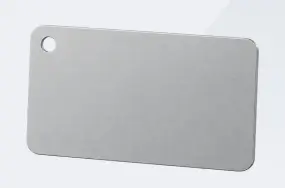
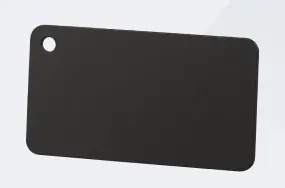
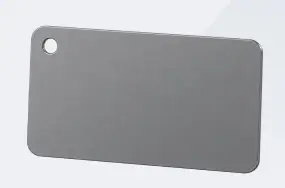
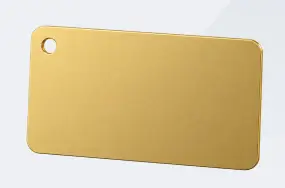
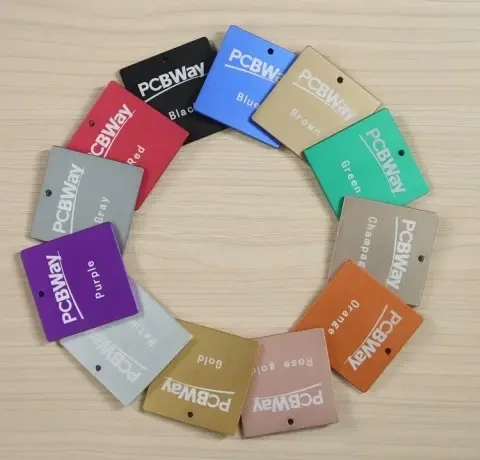
It creates a corrosion-resistant finish. Parts can be anodized in different colors—clear, black, red, and gold are most common—and is usually associated with aluminum. The default color appearance is bright. (Note: 1.There will be a certain color difference between the actual color after anodizing and the above color board. 2.Rack marks are inherent to the anodizing process. When engineering a part that will be anodized, you'd better identify where the part will be racked. Typically, the racking location is chosen to minimize the visibility of the mark after the part is assembled.)

Colors:

Technical Properties

Applicable Sharp edges and burrs Premium appearance availability Tolerances
Metals Removed Yes Met after surface finish

Applicable Materials

Added durability in a variety of colors and finishes

Natural

Natural

Black

Black

Gray

Gray

Gold

Gold

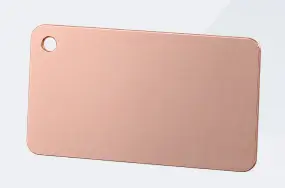
Rose gold

Rose gold

Red

Red

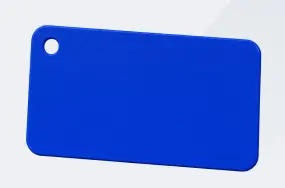
Blue

Blue

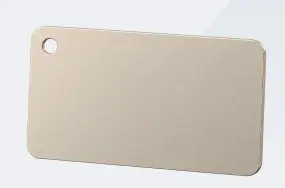
Champagne

Champagne

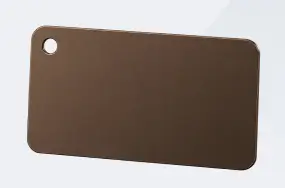
Brown

Brown

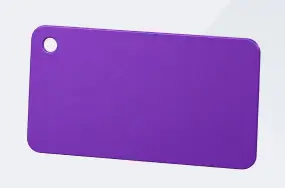
Purple

Purple

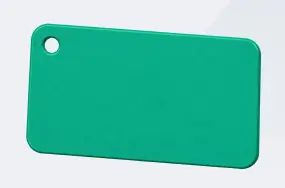
Green

Green

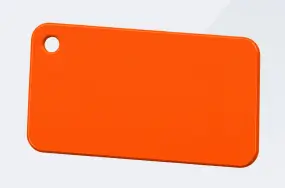
Orange

Orange

Example of an Anodized Part

Anodized
Anodized

CNC Anodizing Finish Guide

1. Principle of Anodizing

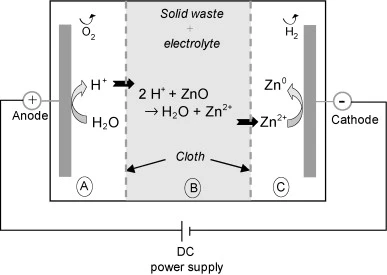
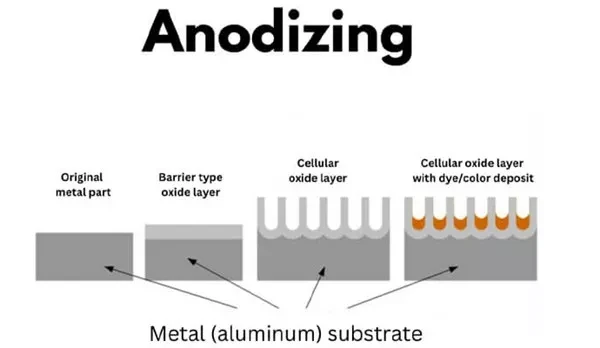
Anodizing is an electrochemical surface treatment process that forms a protective oxide layer on the surface of a metal. For aluminum and aluminum alloys, the workpiece is used as the anode in an electrolytic solution. When an external electric current is applied, a controlled oxide layer forms on the aluminum surface.
For CNC-machined aluminum parts, sulfuric acid anodizing is the most commonly used anodizing process unless otherwise specified. The resulting oxide layer can improve corrosion resistance, surface hardness, wear resistance, and overall appearance.
Unlike paint or powder coating, the anodized layer is formed from the aluminum substrate itself rather than being applied as a separate coating. This allows anodizing to provide a durable finish while maintaining relatively good dimensional consistency.

Anodizing Principle

2. Anodizing Process

In a typical anodizing process, the aluminum or aluminum alloy workpiece serves as the anode, while a suitable conductive material is used as the cathode. Both electrodes are immersed in an electrolyte, commonly a sulfuric acid solution.
When direct current is applied, an electrochemical reaction occurs at the aluminum surface, gradually forming a porous aluminum oxide layer.

2.1. The typical process includes:

  • Surface Preparation: The aluminum part is cleaned and degreased to remove oil, dirt, and machining residues.
  • Pre-Treatment: Depending on the required appearance, processes such as chemical etching or surface brightening may be used to modify the original machining texture.
  • Anodizing: The workpiece is connected to the positive terminal of the power supply and immersed in the electrolyte. An oxide layer is formed on the aluminum surface under controlled electrical conditions.
  • Coloring: If a colored anodized finish is required, the porous oxide layer can be dyed after anodizing.
  • Sealing: The pores in the anodized layer are sealed to improve corrosion resistance and help stabilize the final appearance.
  • Inspection: The finished part is inspected for color consistency, surface defects, coating thickness, and dimensional requirements.
Anodizing Process

3. Anodized Finish and Color

Anodizing can provide both natural metallic finishes and a range of colored surfaces. The final appearance depends on the aluminum alloy, surface preparation, anodizing parameters, dye, and sealing process.

Finish Type Typical Appearance Common Applications
Natural Anodized Metallic aluminum appearance with a transparent or slightly tinted oxide layer Mechanical parts, equipment housings, structural components
Black Anodized Uniform black appearance with a matte or satin finish Electronic housings, equipment panels, mechanical components
Red Anodized Colored red appearance while retaining the underlying metal texture Consumer products, decorative parts, identification components
Blue Anodized Blue appearance with a metallic or matte surface effect Electronic products, equipment housings, decorative CNC parts
Gold Anodized Gold or champagne-like appearance Decorative components, consumer electronics, hardware
Hard Dark gray to black appearance Wear-resistant mechanical parts
Hard Anodized Dark gray to black appearance, depending on process and alloy Wear-resistant mechanical parts, tooling, industrial components

Color consistency can vary between different aluminum alloys and production batches. For cosmetic parts requiring tight color matching, the material grade and surface preparation should be kept consistent.

Anodized Finish and Color

4.Anodizing Design Considerations

  • Anodizing thickness and dimensional changes: Decorative anodizing typically has a film thickness of 5–12 μm, resulting in relatively small dimensional changes. Hard anodizing produces a thicker oxide layer that grows both inward and outward from the substrate, so appropriate dimensional allowances should be considered during design.
  • Sharp corners and edges: Sharp corners and edges are prone to localized burning or blackening during anodizing. Where possible, use rounded edges with a recommended R ≥ 0.2 mm.
  • Deep blind holes and narrow gaps: Deep blind holes and narrow gaps can trap electrolyte, potentially causing color variation or localized corrosion. Drainage features should be provided where possible.
  • Electrical contact points: Suitable conductive contact points must be reserved for anodizing. Slight contact marks may remain after processing, so these points should preferably be located on non-cosmetic surfaces.
  • Aluminum alloy selection: Different aluminum grades can produce noticeably different anodized colors and surface appearances. Die-cast aluminum is generally not recommended for high-quality decorative anodizing.
  • Surface defects remain visible: Anodizing cannot hide scratches, machining marks, or other substrate defects. Any defects present after machining or surface preparation may remain visible in the final anodized appearance.

5.Applications of Anodizing

Anodizing is widely used for CNC-machined aluminum parts that require a combination of appearance, corrosion resistance, and surface durability.

  • Electronic Housings: Provides a durable and uniform finish for electronic enclosures and device housings.
  • Equipment Panels: Improves the appearance and corrosion resistance of aluminum control panels and equipment covers.
  • Mechanical Components: Provides additional surface hardness and wear resistance for aluminum components.
  • Consumer Products: Creates consistent decorative finishes in black, red, blue, gold, and other colors.
  • Automotive and Industrial Parts: Provides corrosion protection and a durable surface finish for aluminum components.
  • Precision CNC Parts: Suitable for aluminum parts where a thin, durable surface treatment is required without the relatively thick buildup associated with paint or powder coating.

Videos of Anodized

LoGo
PCBWay
PCBWayCom
This video demonstrates the end-to-end production of a CNC-machined part, covering everything from initial design to final machining and coloring. Steps: Part Nesting, Machine Setup, CNC Milling, Sandblasting, Alkaline Etching, Desmutting, Anodizing, Washing, Coloring, Washing, Sealing.